Prof. Evanghelia Stead (Université de Versailles Saint-Quentin-en-Yvelines) is hosting a public lecture organized in collaboration with CERES. The lecture, titled “Comparative Readings of the Odyssey/Second Odyssey and Faust I: Enigma, Language of Fire, Images” will take place on the Brussels KU Leuven campus (Warmoesberg 43, Hermes Building, room 6303) on Tuesday, April 22, between 6pm and 7:30pm. Everyone is welcome, no registration is necessary.
Having returned to Ithaca, bringing Homer’s Odyssey to an end, Ulysses leaves again on an unexpected second voyage that often proves his last. According to Dante’s Inferno, canto 26, Ulysses never returned to Ithaca but inflames his companions into seeking another world beyond the permitted limit. Likewise Goethe’s Faust wagers with Mephistopheles on unfulfilled desire and a gratified moment suspending time. All three pursue a task infringing a boundary (in space, time, even the work itself). All three structure long, complex and daunting literary works that grant rich and layered meaning but are difficult to grasp. This lecture will discuss how comparative readings may inventively engage us with such established texts and help us to consider them creatively within cultural history. It will address Tiresias’s obscure words in the Odyssey, Ulysses’s awe-inspiring punishment within a gigantic flame in Dante’s Inferno, and approach Goethe’s grand Faust I through books and prints read as cultural objects.
About Evanghelia Stead
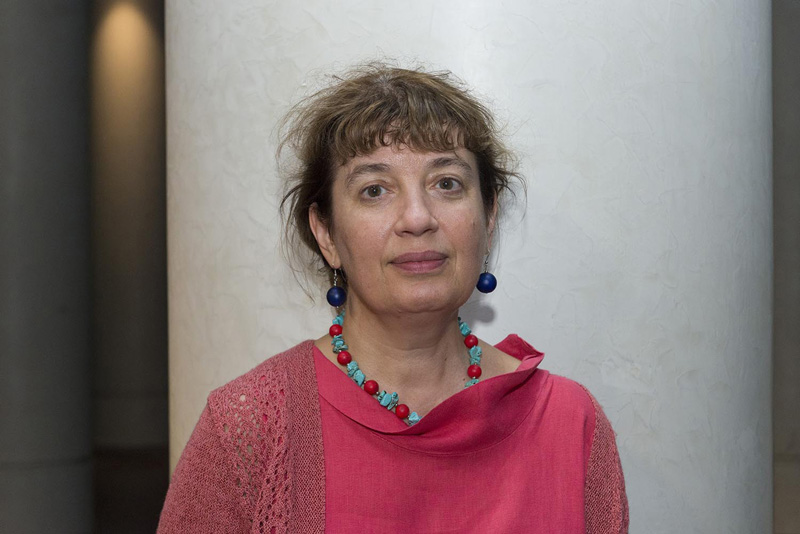
Linguist, literary translator and honorary Fellow of the Institut Universitaire de France, Evanghelia Stead is Professor of Comparative Literature and Print Culture at the Université de Versailles-Saint-Quentin (UVSQ Paris-Saclay). In 2023 she brought the TIGRE seminar on literature, visual and print culture to UVSQ, which she had been running in Paris at the École Normale Supérieure (Department of the Arts) since 2004. She has been honoured internationally with visiting professorships at Marburg and Verona Universities, and won numerous sponsored research fellowships (CNRS, EURIAS/FRIAS, IUF, Beinecke). She has published extensively on fin-de-siècle culture, periodicals, history of the book, literature and iconography, Greek and Latin myths in modern literature, and the literary tradition of ‘the Thousand and Second Night.’ A well-known specialist on fin-de-siècle art and culture, she has also developed methodologies for periodical studies, expertise on reading books as cultural objects, reading with images, and through literature-related visual art.
 receptionstudies.be